What the Mountains Ask of Us
By Athara Adventures
We are often asked why Athara returns, again and again, to the mountains.
Why we choose places shaped by weather, altitude, and time, mountain landscapes that invite reflection rather than distraction. Why we work and move in environments that do not bend easily to comfort or convenience.
The simple answer is that the mountains ask something of us.
Not in words, but in presence. In pace. In the way they quietly disrupt the habits we bring with us from daily life.
For many women, especially those navigating periods of transition, this asking feels both unsettling and deeply familiar.
When the old ways no longer fit
Choosing differently does not usually begin with dissatisfaction.
It begins with a subtle sense of misalignment. A feeling that the life we are living no longer reflects who we are becoming.
For women who have been capable and dependable for much of their lives, this can feel deeply unsettling. There may be gratitude for what has been built, alongside a growing awareness that something wants to shift.
This does not mean the past was wrong. It means the present is asking for attention.
ACT invites us to hold this tension without rushing to resolve it. To notice discomfort without immediately trying to fix it.
The courage to disappoint expectations
One of the hardest parts of choosing differently is the fear of disappointing others.
Women who have lived responsibly are often deeply attuned to expectations. Of family. Of colleagues. Of the roles they inhabit.
Choosing differently can feel selfish, even when it is necessary.
ACT reminds us that values-based living sometimes requires tolerating discomfort, including the discomfort of not being understood. Alignment does not always come with approval.
The courage here is not in rebellion, but in honesty.
Mountains are not a backdrop
In much of modern life, nature is treated as scenery.
Something to look at. Something to pass through. Something that exists around us, but not with us.
At Athara, we experience the mountains differently. They are not a backdrop to our work. They are participants.
Mountains do not rush. They do not perform. They do not adapt themselves to our preferences. Their scale makes it difficult to stay preoccupied with the small, looping thoughts that often fill our minds.
When we step into this kind of mountain landscape, something begins to shift. Attention widens. Perspective changes. What felt urgent often loosens its grip.
The quiet discipline of pace
One of the first things the mountains ask of us is to slow down.
Not as an idea, but as a necessity.
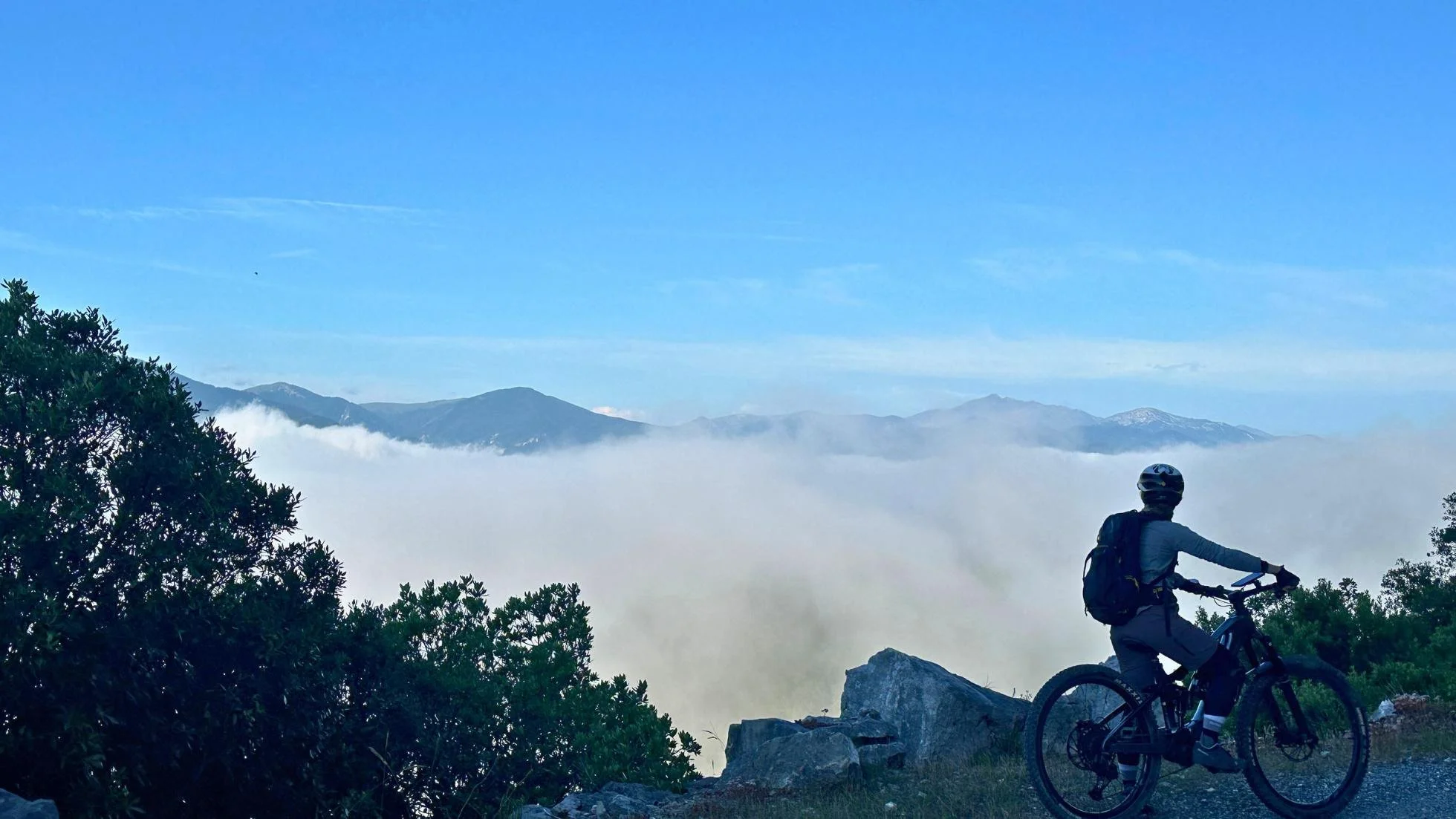
Whether we are walking, riding, or simply standing still, the terrain sets the rhythm. Breath becomes noticeable. Effort becomes honest. We are invited into a place that cannot be forced without consequence.
This is where many women recognise something they have been missing. Diana Hill, Ph.D., describes this as wise effort:
“Wise effort is aligning your energy with your values — so you can do less of what drains you and more of what fuels you. It may not be more time or rest that you need, but rather a way to focus your energy — in the right amount, in the right direction.”
In the mountains, this idea stops being theoretical. We feel it in our bodies. Too much force costs us. Too little engagement leaves us disconnected. The landscape teaches us about effort that is responsive rather than relentless.
ACT speaks to this kind of embodied awareness. When we are present in our bodies, we are less likely to be pulled entirely into our thoughts.
In the mountains, this presence happens naturally. We feel our feet. We notice our breath. We pay attention, because attention is required.
This is not mindfulness as a technique. It is responsiveness to what is actually here.
What becomes visible in scale
Scale has a way of revealing things we did not know we were holding.
In wide mountain landscapes, many women notice how much responsibility they carry without question. How much effort goes into staying composed, capable, and in control.
The mountains do not demand that we let these things go. But they do make them visible.
When we stand in a place shaped over millennia, our own stories are held differently. They are not minimised, but they are no longer the only thing in view.
This shift often brings relief. Sometimes it brings grief. Often it brings clarity.
Five ways the mountains quietly work on us
The mountains rarely announce what they offer. Their influence is subtle, cumulative, and deeply personal. These are some of the ways we see that work unfold.
They interrupt urgency
Weather, terrain, and daylight set limits. We cannot rush without consequence. This interruption creates space to notice what has been driving us.
They invite honesty about capacity
Effort becomes real. We learn where to push and where to rest, without judgement.
They draw attention out of the mind and into the body
Breath, balance, and movement ground us in the present moment.
They offer perspective without commentary
There is no instruction, no interpretation. Meaning emerges naturally, if we are willing to notice.
They remind us we belong to something larger
Not as an idea, but as a felt sense of connection.
These experiences cannot be replicated through reflection alone. They are embodied, lived, and often remembered long after we return home.

Our five mountains, and what they teach us
Over time, certain mountain regions have become part of Athara’s story. Not because they are impressive on a map, but because of what they invite in the people who spend time with them.
France (the Pyrenees)
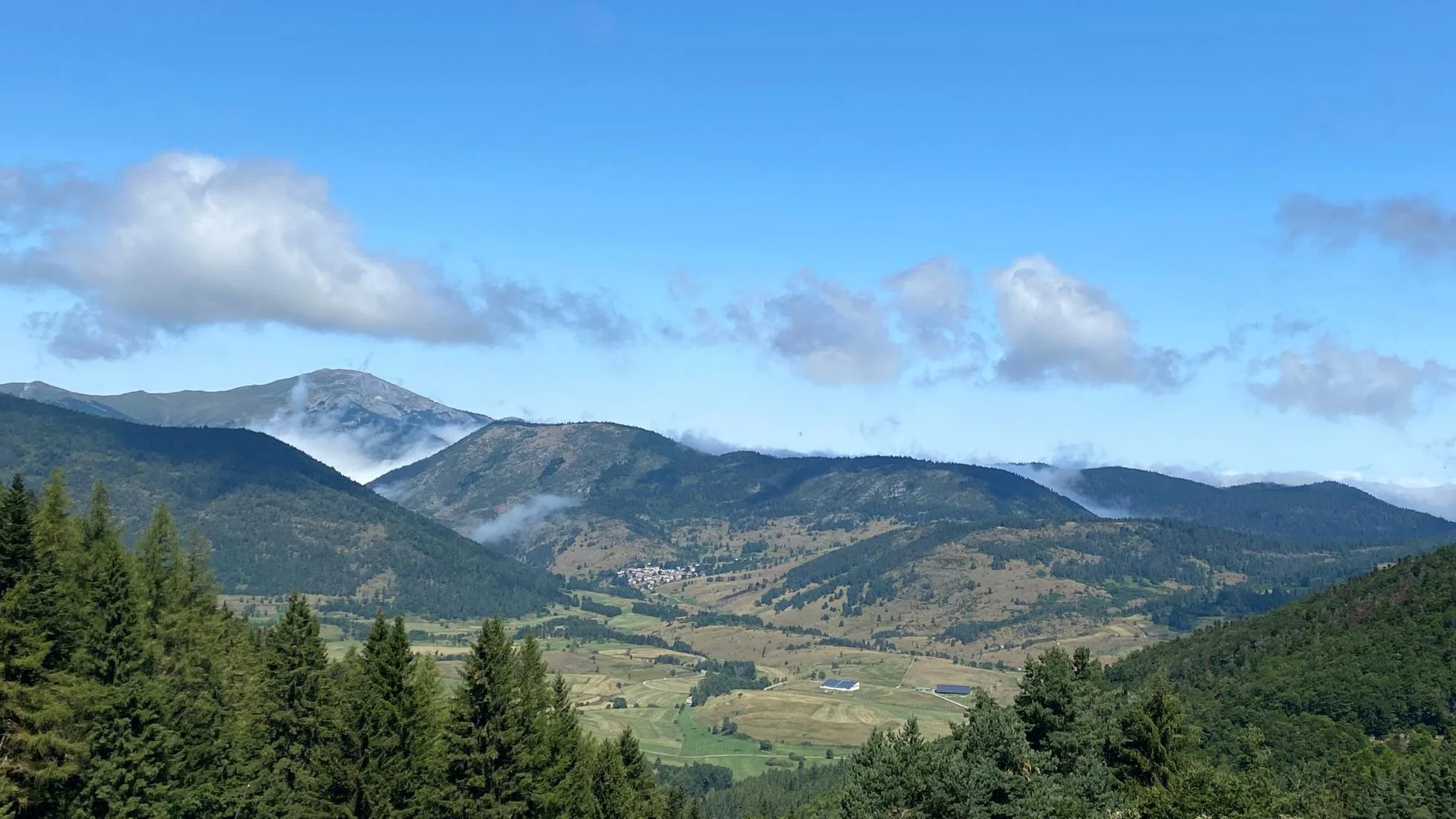
The Pyrenees teach us about rhythm and continuity. Life unfolds through villages, shared meals, and well-worn paths, where movement is woven into daily living rather than extracted as effort.Vermont (the Green Mountains)
Vermont offers steadiness and containment. These mountains hold space quietly, supporting reflection and deep internal work through simplicity and stillness.Norway (Scandinavian mountains)
Norway teaches respect for scale and weather. It reminds us of humility, resilience, and the power of being in relationship with forces larger than ourselves.Spain (mountain regions of northern Spain)
Spain’s mountains bring warmth, openness, and flow. They invite engagement with life as it is lived, social, embodied, and connected to culture and history.Ireland (ancient upland landscapes)
Ireland’s landscapes carry a quieter depth. Soft, ancient, and grounded, they remind us that meaning does not always come from height or drama, but from continuity, story, and belonging.
Each place asks something slightly different. Together, they shape how Athara works, moves, and listens.
Why this matters in times of transition
Periods of transition often come with internal noise.
Questions without answers. Identities in flux. Old strategies no longer working as they once did.
For many women navigating midlife transitions, time in the mountains offers a way to reconnect with values, perspective, and a sense of direction.
In these moments, it is tempting to think our way forward. To analyse, plan, and resolve.
The mountains offer a different path. They do not answer questions directly. Instead, they change the conditions in which those questions are held.
ACT recognises the power of this shift. When we stop struggling with our inner experience, even briefly, new options become visible.
The mountains support this without asking anything in return.
How Athara works with landscape

At Athara, we choose locations intentionally.
Whether through retreat or through moving together on foot or by bike, we design experiences that allow women to meet the mountains at a human pace.
We work with women from the UK, Europe, the United States, and Canada, many of whom arrive carrying similar questions, even when their lives look outwardly different.
Our role is not to interpret the mountains for you. It is to create the conditions where you can listen for yourself.
Landscape becomes a partner in the work. Quiet, steady, and uncompromising in the best possible way.
An invitation to listen
The mountains do not promise transformation.
They do not offer answers on demand.
What they offer is something quieter and often more enduring. Space. Perspective. A return to what is real.
For many women, this is enough to begin again. Not by force. Not by reinvention. But by listening more closely to what has been asking for attention all along.