
Postcard from Ariège: May in Southern France
By Athara Adventures
May is magical in the Pyrenees.
As June begins, we wanted to look back and share a few notes from daily life here in Ariège, from each of us.
May brought that shift towards summer in southern France: winter clothes finally being put away, fruit appearing at the markets, longer evenings outside, louder birdsong, and familiar paths changing almost week by week.
Here is what we were each noticing. We hope this gives you a small glimpse into life here this month: the routes being walked and tested, the fruit coming into season, the once-a-year festivals, the flowers by the roadside, and the small things that make this place feel alive.
Warmly,
Sarah, Anna and Seoka
Athara Adventures
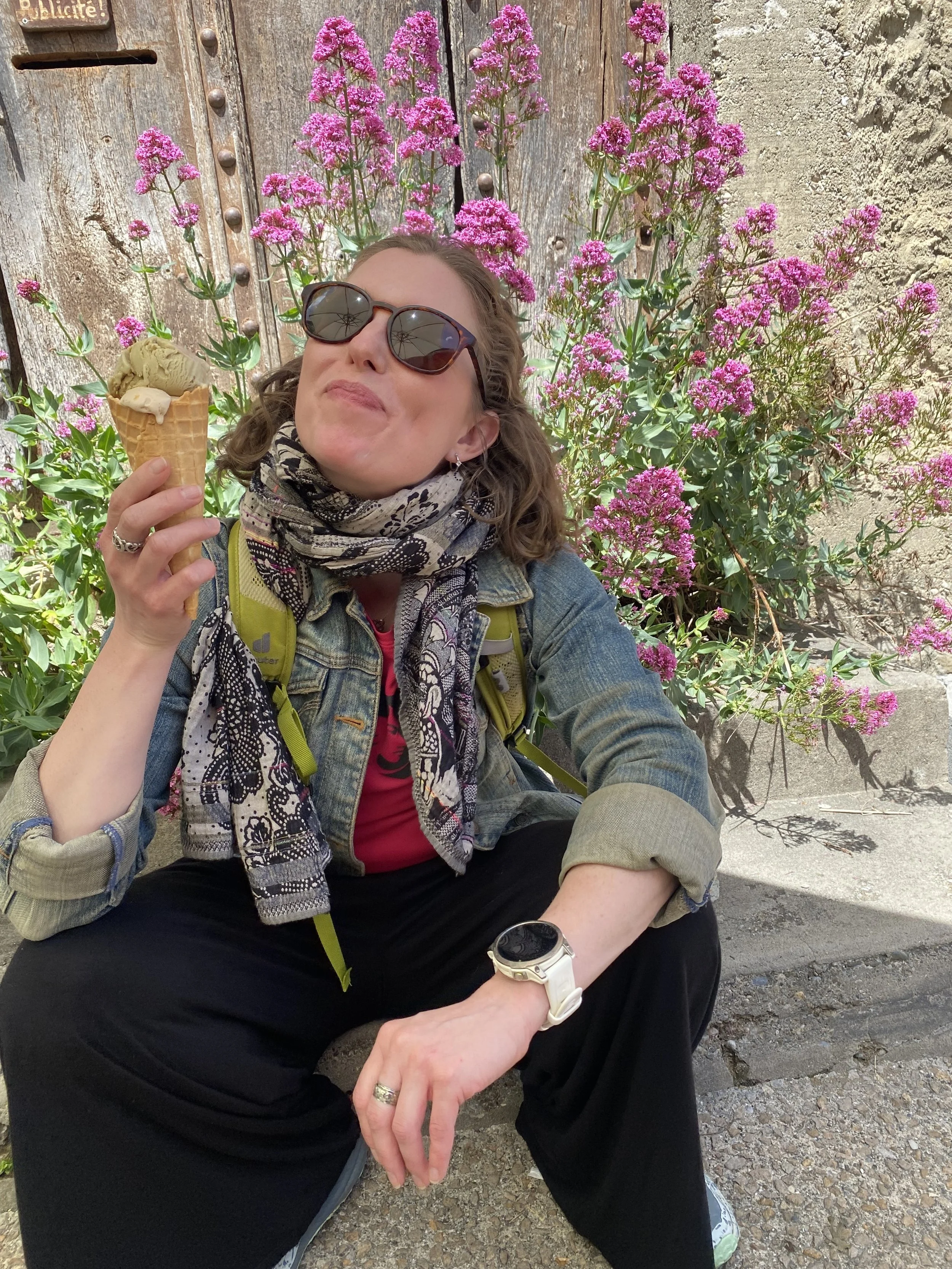
Sarah: on the trail
I have been adding more hiking back into my weekly rhythm this month. Since getting my new gravel bike in February, I had mostly been out cycling, including a couple of 80 kilometre rides in May, and I have been keeping one eye on a longer distance trip from the Atlantic to the Mediterranean. But with our autumn walking tours ahead, I have started returning more deliberately to the trails, too. I like how adaptable hiking is. If the weather is not quite right for biking, if there is a little drizzle or enough wind to make the bike feel less sensible, I can still put on good gear, take the dog, and head out from home.
I live close to a GR route, one of France’s long-distance walking paths, so I can walk down from my house, join the trail, and follow it up towards the ruins of an ancient church established around the year 900 or 1000. It is peaceful there, surrounded by cypress trees, and I can keep the loop simple or add extra sections depending on the day. Over the next month I will be adding in more elevation and training, and I also like getting out to check new trails. That is part of the pleasure of living here and part of the work too: finding routes, testing conditions, understanding how a walk feels in different weather, and noticing what might make a day flow well for the people who join us.
I have also been thinking about the events here that happen only once a year. The Rose Festival in Camon was one of those. We had missed it before by just a weekend, and this year I remembered in time, looked it up, and Anna and I were able to go. These moments matter because if you miss that one weekend, you wait the whole year. Living close to the rhythm of a place means learning what is worth making time for, what needs planning around, and what can become a special part of being here.
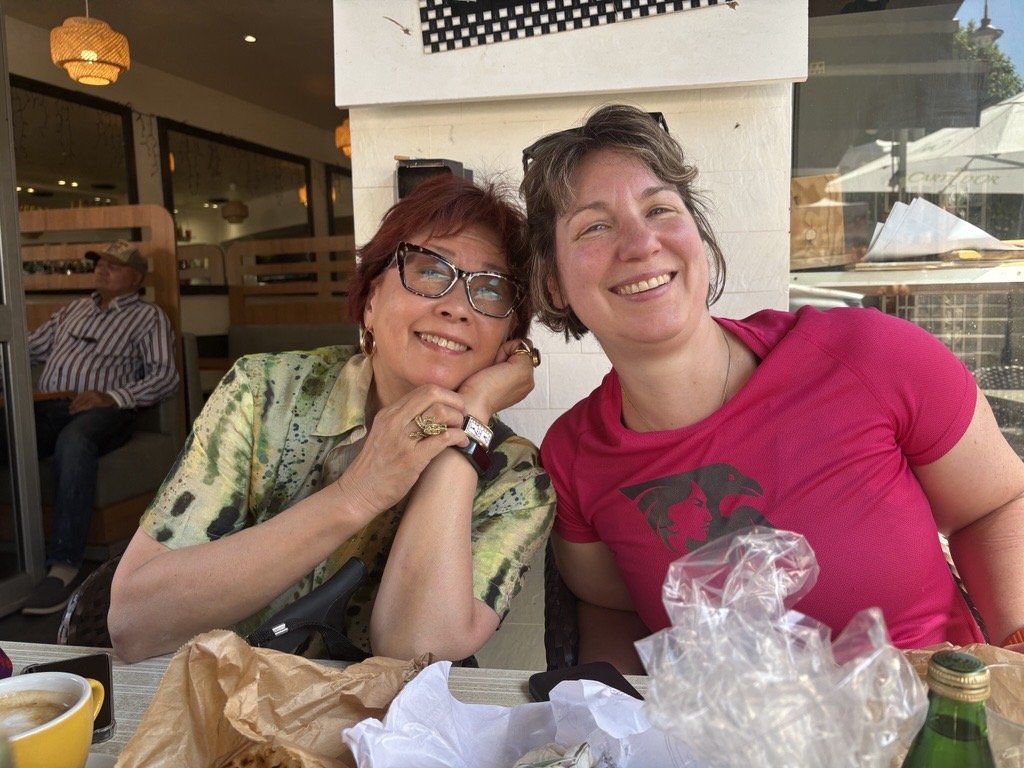
Anna: roses, fruit and village life
For me, May has been full of the feeling that everything is changing quickly. I have been on my new gravel bike too, doing a little less hiking and more biking because I am excited about riding again, and also because I have been enjoying the practical side of getting the new bike right: adjusting the saddle, making the fit more comfortable, building up distance. Even on routes we know well, the experience changes depending on whether you are walking or riding. On the bike, the landscape opens differently. The leaves are coming out, the grass is changing, different wildflowers are blooming, and there is this sense of renewed life in familiar places.
The markets are changing too. Nectarines, peaches and apricots have started to appear. Right now some are still coming over the border from Spain, but soon they will be coming from Aude, and they are absolutely delicious. I have been eating nectarines with yoghurt in the morning, and there is something about cutting into, or biting into, a perfectly ripe peach or nectarine here that brings a great deal of joy. The raspberries are coming too. The other day, a friend and I stood by the raspberry bushes picking ripe berries straight from the plant. Sarah brought cherries as snacks when we went to the Rose Festival, and those were delicious as well.
Camon itself was really special. There were different varieties of roses everywhere, local markets set up in different parts of the village, food in the centre, crepes, charcuterie, vegetarian plates, drinks, and someone selling sheep’s milk ice cream, which was absolutely delicious. The abbey, which is privately owned and not usually open during the year, was open for a tour. I asked one of the volunteers how Camon became known for its roses, and she told me it began with one woman who loved roses and planted them in front of her house. Her neighbours liked them, she shared them, and eventually the mayor supported the idea. The town bought rose plants for anyone who wanted them, and over time the village became known for these beautiful roses. As you walk through Camon, you see old houses with dates above the doors, vines growing along the fortified walls, and this feeling of having a foot in two times: the present day, and the traditions and structures that have been there for hundreds of years.
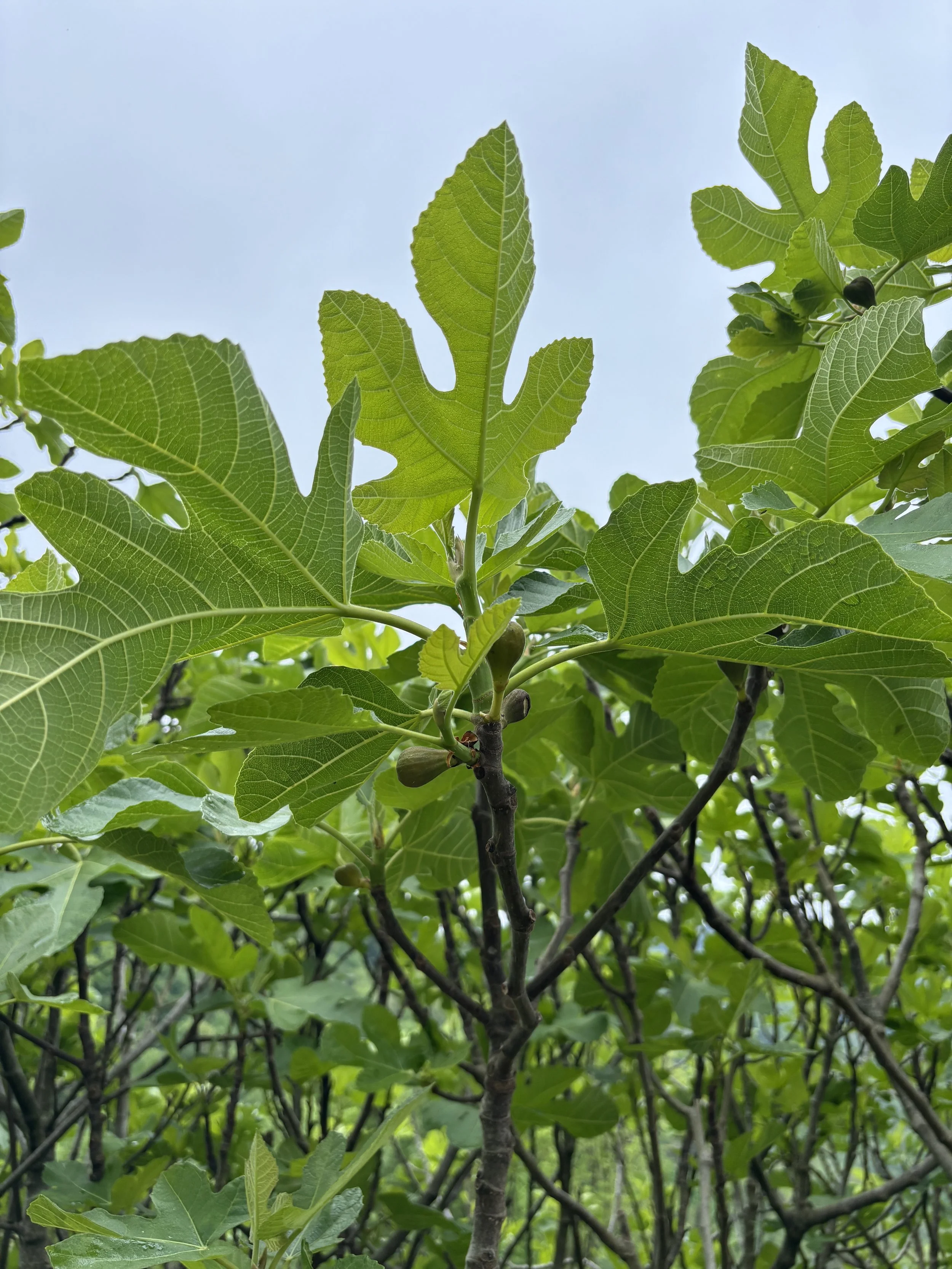
Seoka: slowing down enough to notice
After a minor concussion in April, I have had to take things more slowly than usual. It happened in one of those ordinary, slightly ridiculous household moments, the kind where you bend down, misjudge the space around you, and suddenly your body reminds you that it is in charge. Since then, I have been going very gently on my daily walks, and that slower pace has changed the whole experience.
More than I ever have before, I have been picking wildflowers, smelling them, looking closely at them, and trying to learn their names. I am noticing much more of the landscape because I am moving slowly. There are masses of buttercups and daisies, and there was one flower I had never seen before, still partly in bud. When I looked it up, it seemed to be a marsh flower, although it was growing on a sunny hillside, which was confusing but also wonderful.
I have started putting flowers all around the house. I have been using previously dusty champagne glasses as vases and a little bud vase Sarah gave me. Now there are fresh flowers on every floor and in the main rooms. Moving slowly has changed the view. I am used to walking faster and with my head down so I can watch the road, making sure I do not trip, or avoiding whatever the farm animals have left behind. But on the bike, and now during recovery too, I have been reminded to look up, to look ahead, to look where I want to go. It feels simple, but it feels like something my body is trying to teach me.
I have also been watching the fig trees on my little plot of land up the road from my house. There are three of them, and one is right next to the road, so each time I walk past I check the size of the leaves and the little figs. I take photos of the buds and send them to a friend in Vermont, and then a week later I send another one so we can watch the fig leaves grow together. She sends back pictures of her New England winter-spring see-saw, while I send her flowers in full bloom. Of course, I am not doing it to be mean. I am sending her spring on the French mountain side so she can enjoy it too. And as usual, I am always looking for the animals: where the donkeys are, where the goats are munching, and whether the baby cow is near enough to the fence to say hello.
Athara Adventures creates thoughtful walking holidays, cultural experiences and retreats in France and the Pyrenees. Founded by Sarah, Anna and Seoka, Athara brings together a love of place, local knowledge, meaningful travel and time outdoors, helping guests experience this part of France with more depth, connection and ease.