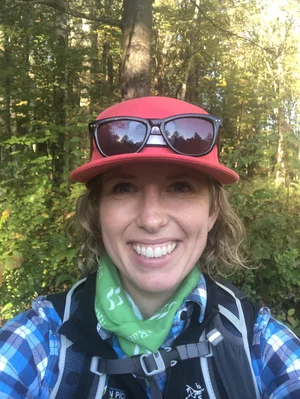
Why Autumn Is the Best Time for a Walking Holiday in the Pyrenees
By Sarah Newell | Founder & Co-Owner, Athara Adventures | BICP Ride Leader | Wilderness First Aid & CPR | Outdoor Program Risk Management

For many walkers, September and October are the most rewarding months to experience the Pyrenees on foot.
The heat has softened. The busiest weeks of summer have passed. The mountains feel more spacious, the villages more themselves, and the light takes on a clarity that makes the landscape feel newly awake.
A walking holiday in the Pyrenees is always shaped by terrain, weather, food, timing and pace. In autumn, those elements often come together beautifully. Days are still generous enough for satisfying walks, but cooler air makes movement feel easier. Trails are quieter. Local life returns to a calmer rhythm. Meals feel seasonal and rooted.
At Athara, the Pyrenees are not a product we researched from afar. They are the landscape we live inside. Sarah, Anna and Seoka walk these paths, ride these roads, test variations, revisit villages, check timings, notice weather shifts, and make hundreds of small decisions before a guest ever arrives.
By the time a tour appears on the website, thousands of footsteps have already gone into shaping it.
A well-planned walking holiday is not just a route on a map. It is thousands of small decisions made before you arrive, so that once you are there, you can simply walk.
Who autumn walking in the Pyrenees is for
An autumn walking holiday in the Pyrenees is a good fit if you want a holiday that feels active, but not punishing.
You enjoy being outdoors, but you are not looking for a route that turns every day into a test. You want mountain views, quiet paths, cultural depth, good food, and enough structure to relax into the experience.
This kind of holiday can work beautifully for solo travellers, couples, groups of friends, sisters, mothers and daughters, walking groups, or families who want a shared experience with more depth than a standard break.
It may not be the right fit if you are looking for high-altitude exposure, fast-paced trekking, or a holiday built around intensity for its own sake.
Many women are not looking for a holiday that asks more of them. They are looking for one that gives something back.
Autumn in the Pyrenees is especially good at that.
The weather is kinder to walking
Summer walking in southern France can be beautiful, but heat changes everything.
In September and October, walking often becomes more comfortable. Mornings are cooler. The light is softer. Longer climbs feel more manageable. Lunch stops become something to enjoy rather than recover from.
This matters because a walking holiday is not only about completing a route. It is about having enough energy left to notice where you are.
A good walking day should allow for effort, rest, conversation and attention. The body works, but it is not overwhelmed. You feel the satisfaction of movement without the whole experience becoming about endurance.
This is where autumn excels.
It allows the Pyrenees to be experienced with steadiness rather than strain.
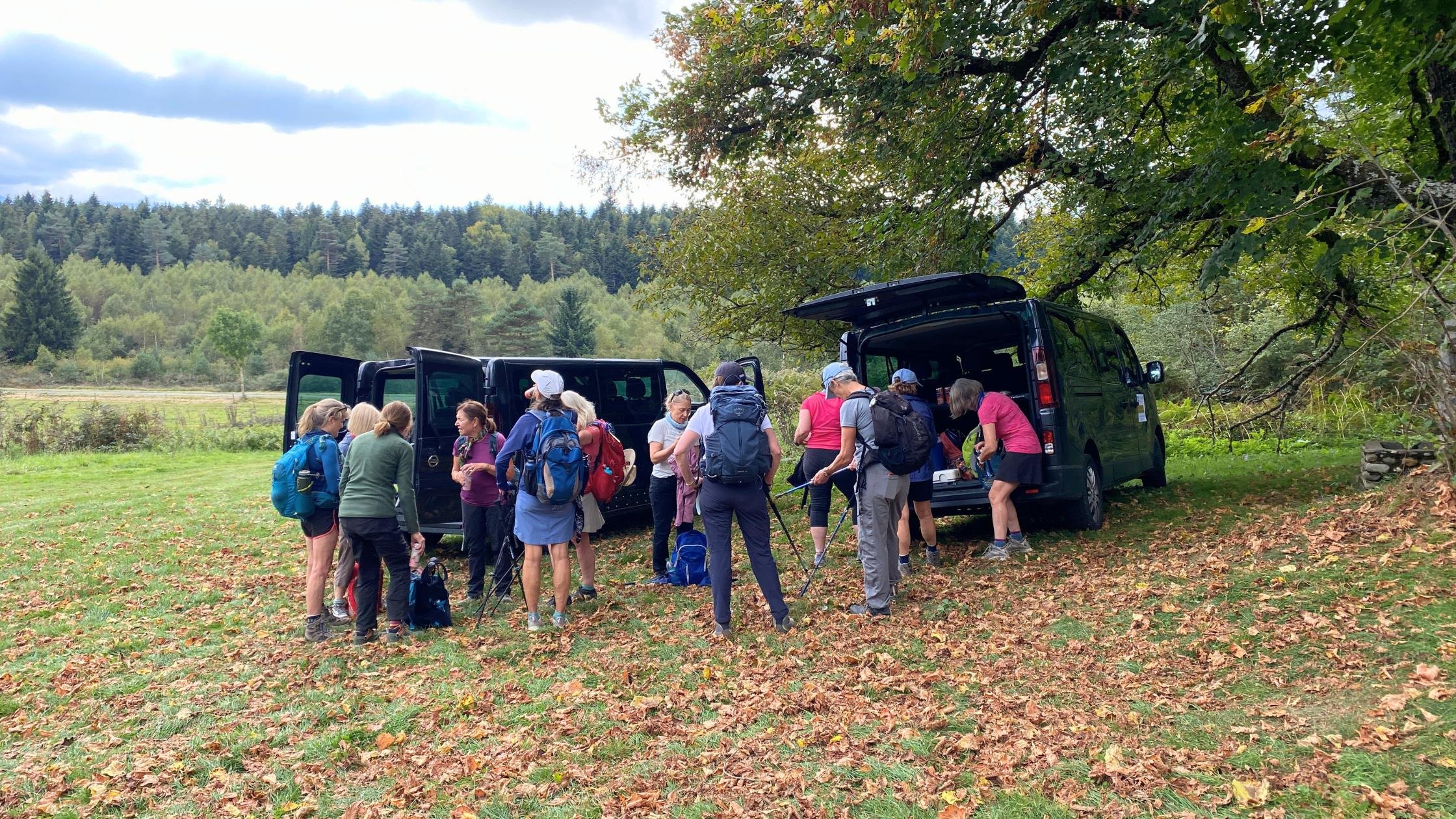
An Athara hiking group in October enjoys the flexibility to wear shorts, long pants, short sleeves, or long.
The paths are quieter
The Pyrenees are never as crowded as some of Europe’s better-known mountain regions, but autumn brings a particular spaciousness.
Trails are quieter. Villages breathe again after the peak summer weeks. Restaurants, markets and local roads return to a slower rhythm.
For walkers, this changes the whole feeling of a journey.
There is less pressure to rush, less sense of being processed through a place, and more opportunity to experience the landscape as it is. Silence becomes easier to find. Views can be taken in without hurry. The day feels less like an itinerary and more like a conversation with place.
For many people travelling from the UK, Europe, the United States or Canada, this slower rhythm is part of what makes walking in the Pyrenees feel so restorative.
Not because it removes effort, but because it restores proportion.
Autumn carries a different kind of abundance
In the Pyrenees, autumn is not a season of absence. It is a season of ripening.
There are harvests, local markets, cooler evenings, changing colours, and a stronger sense of seasonality. Food feels connected to the land. Wine, cheese, bread, fruit and simple meals become part of the experience rather than extras around it.
This is one of the reasons walking holidays in France feel different from walking holidays almost anywhere else.
The walking matters. But so does what happens around the walking.
A good day might include a steady climb, a ruined castle, a village lunch, a conversation on a quiet track, and an evening meal that allows the body to settle.
The richness is not dramatic. It accumulates.
The invisible work behind a well-planned walking holiday
A walking holiday can look simple on a page.
A distance. A route. A place to sleep. A meal at the end of the day.
What is harder to see is the judgement behind those choices.
At Athara, every tour is shaped by lived experience of the land. Sarah, Anna and Seoka walk the routes themselves. They test variations. They check what feels beautiful, what feels too exposed, what flows well, what creates unnecessary fatigue, where the best pauses are, and which details make the difference between a good holiday and a deeply satisfying one.
A good walking holiday often feels natural.
The day begins easily. The path makes sense. The lunch stop arrives at the right moment. The climb is challenging but worthwhile. The accommodation supports the rhythm of the trip. The guide knows when to speak, when to adjust, and when to let the landscape do the work.
But ease is rarely accidental.
Behind every Athara tour are route tests, timing checks, weather considerations, food choices, local conversations, alternative plans and countless small decisions made on foot.
This is the kind of care that is hard to see on an itinerary, but easy to feel when you are there.
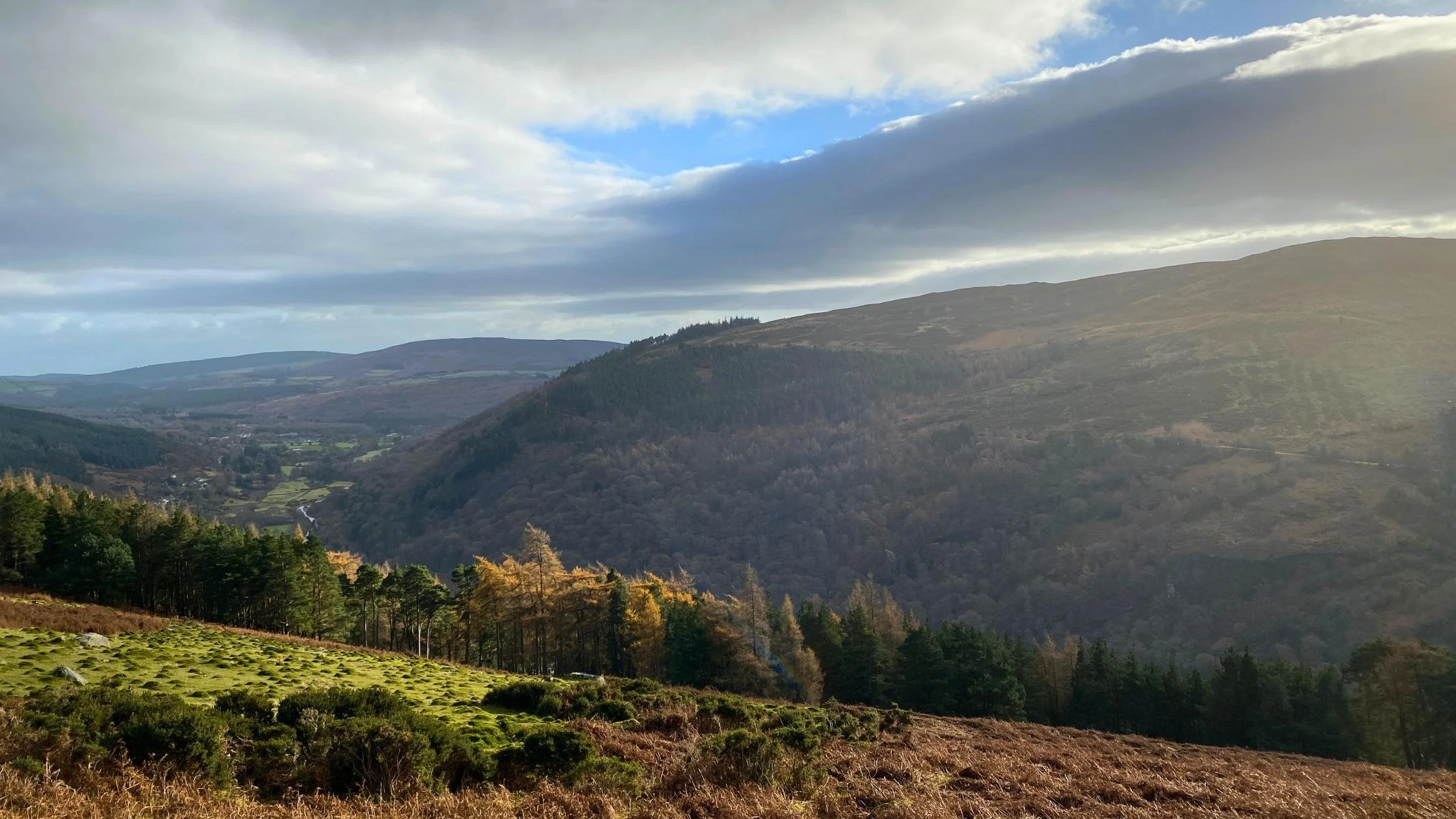
As foliage starts to drop, more views from the mountain open up.
Why women-led travel changes the detail
Athara is women-founded and women-led, and that shapes the experience in practical ways.
Not loudly. Not as a slogan. But in the questions asked before a tour is built.
How will this pace feel on day three?
Where will people need reassurance?
Where is the best place to pause?
How much challenge feels satisfying without becoming too much?
What will help someone travelling alone feel comfortable?
Where does the group need structure, and where does it need space?
These details matter.
They are especially important for women who want to feel supported without being managed. For women who want to move through wild landscapes, but do not want the experience to become performative. For women who are capable and independent, but still appreciate travelling with people who have thought carefully about the whole journey.
At Athara, the support is there when you want it, and spacious when you do not.
Five reasons autumn walking works so well in the Pyrenees
Cooler temperatures support better walking
The body can work steadily without being drained by summer heat.
The trails feel calmer and more spacious
Autumn allows for a quieter connection with landscape and village life.
Food and wine are deeply tied to the season
Harvest, local produce and simple meals make autumn walking feel rooted in place.
The light is clear and generous
Mountain views often feel sharper, softer and more atmospheric.
The pace feels more human
The season invites walking that is active, satisfying and unhurried.
These are practical advantages, but they also change the emotional texture of the holiday.
A well-designed autumn walking holiday gives enough challenge to feel alive, and enough space to actually enjoy it.
Scheduled dates are one way in, but not the only way
Some people join Athara through scheduled small-group tours. These are ideal if you want to arrive into an experience that has already been carefully shaped, with the route, accommodation, meals, guiding and pacing thoughtfully arranged.
But scheduled dates are only one way into Athara’s routes.
For groups of friends, families, women’s groups, walking companions, coaching communities or private parties, many Athara routes can also be shaped as private or bespoke walking holidays, where season, guide availability and group size allow.
This works particularly well if you already know who you want to travel with, but do not want to carry the planning yourselves.
Athara brings the route knowledge, local relationships, pacing, accommodation, food, logistics and judgement. You bring the people and the reason for gathering.
The date is a detail. The route, the experience, and the way it is shaped around the group are what matter most.
If you are considering a walking holiday in the Pyrenees, you can explore Athara’s upcoming small-group walking tours or start a conversation about a private walking holiday for your own group.
Walking the Pyrenees with Athara
A walking holiday in the Pyrenees is never only about distance.
It is about the quality of the days. The way the route unfolds. The care behind the planning. The confidence that the people guiding you know the land because they live it.
September and October are ideal months for this kind of travel.
Cooler weather, quieter paths, seasonal food and deeply rooted landscapes make autumn one of the best times to experience the Pyrenees on foot.
For those looking for a walking holiday in France that feels active, thoughtful and beautifully considered, autumn in the Pyrenees is hard to better.
You can explore Athara’s Pyrenees walking holidays, including routes such as the Sentier Cathare walking tour and Chemin de la Liberté walking tour, or enquire about shaping a private walking holiday for your own group.
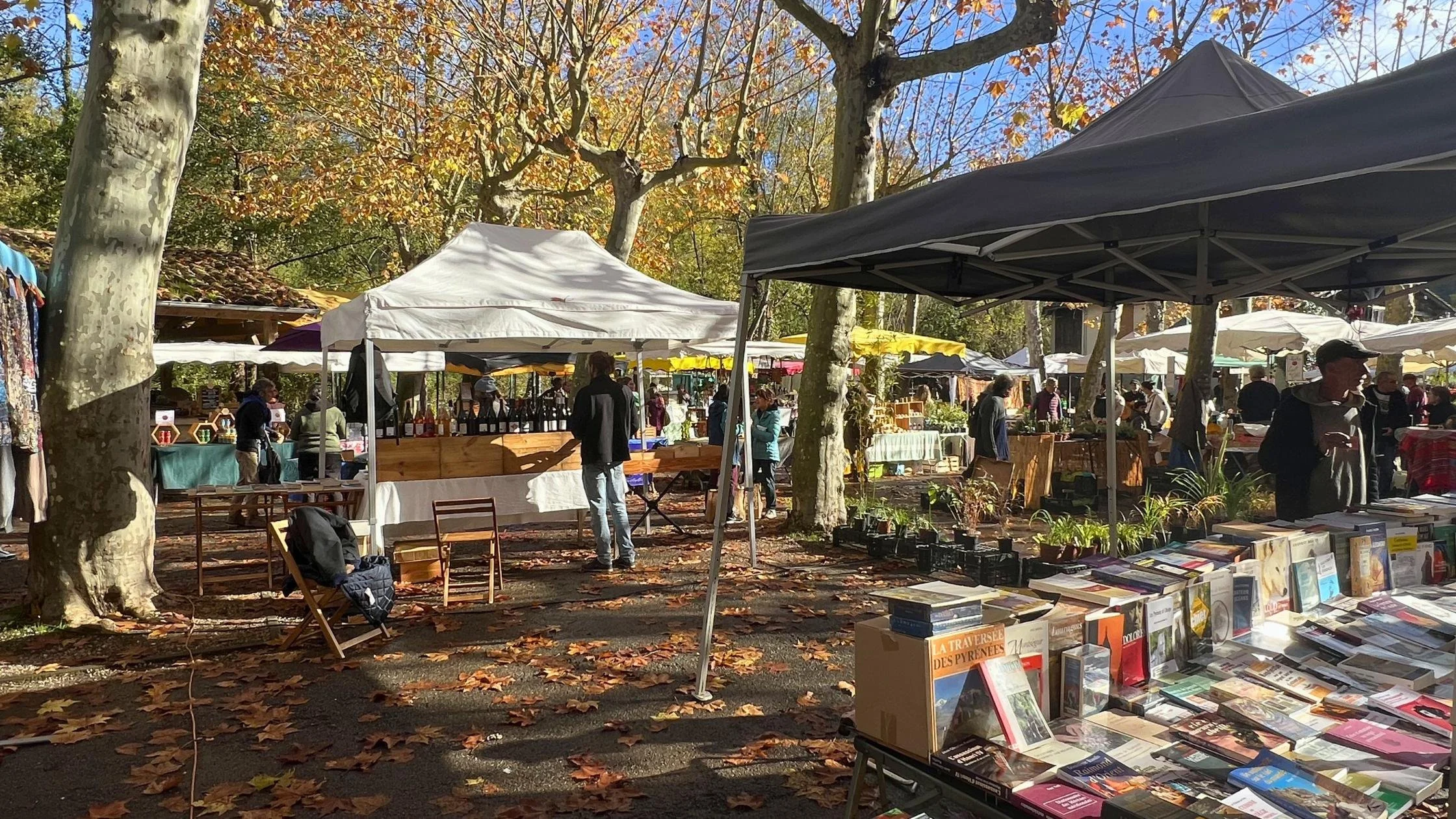
Weekly French markets take on a slower pace in the autumn.
Frequently asked questions
Is September a good time for walking in the Pyrenees?
Yes. September is often one of the best months for walking in the Pyrenees, with cooler temperatures than summer, quieter paths and good conditions for longer days on foot.
Is October too late for a walking holiday in the Pyrenees?
October can be an excellent time for lower and mid-level Pyrenean walking routes, depending on weather, altitude and the specific itinerary. Athara chooses autumn routes carefully to suit the season.
Do I need to be very fit for an Athara walking holiday?
You do not need to be an elite hiker, but you should be comfortable walking for several hours and have a regular walking practice. Athara is careful about matching people to the right route.
Can I book a private walking holiday with friends or family?
Yes. Where season, guide availability and group size allow, Athara can shape private walking holidays for friends, families and groups using existing routes as a foundation.
What makes Athara’s Pyrenees tours different?
Athara is rooted in the Pyrenees. The routes are walked, tested and refined by the women who lead and design them, with attention to pace, food, accommodation, landscape and group experience.