Walking with the Shepherds: The Living Tradition of Transhumance
By Sarah Newell | Founder & Co-Owner, Athara Adventures | BICP Ride Leader | Wilderness First Aid & CPR | Outdoor Program Risk Management
There are experiences that allow you to visit a place, and then there are experiences that invite you into the heart of a community.
This June, we had the privilege of joining one of the Pyrenees' most cherished traditions: Transhumance, the seasonal movement of livestock from the valleys to the high mountain pastures. While the journey itself lasts only a few days each year, the tradition has shaped life in these mountains for centuries and continues to connect generations of farmers, shepherds, families, and local communities.
“It's impossible to participate without feeling that you've stepped into something much larger than yourself,” says co-founder Anna Berez.
A tradition recognized around the world
In December 2023, UNESCO added Transhumance: The Seasonal Droving of Livestock to its Representative List of the Intangible Cultural Heritage of Humanity. The recognition celebrates not simply the movement of animals, but an entire way of life built on ecological knowledge, community cooperation, traditional skills, and cultural identity.
Every spring and autumn, herders guide sheep, cattle, horses, and other livestock between winter valleys and summer mountain pastures, traveling on foot or horseback with the help of highly trained dogs and, often, their families. Along these ancient pastoral routes, generations have passed down knowledge of landscapes, animal care, natural resource management, traditional foods, crafts, songs, and celebrations. UNESCO recognizes that these living traditions strengthen communities, reinforce cultural identity, and help counter rural depopulation by keeping mountain cultures vibrant.
We weren't simply observing history.
We were walking inside it.
An early morning beginning
Our day began just after sunrise in the small village of Lescure.
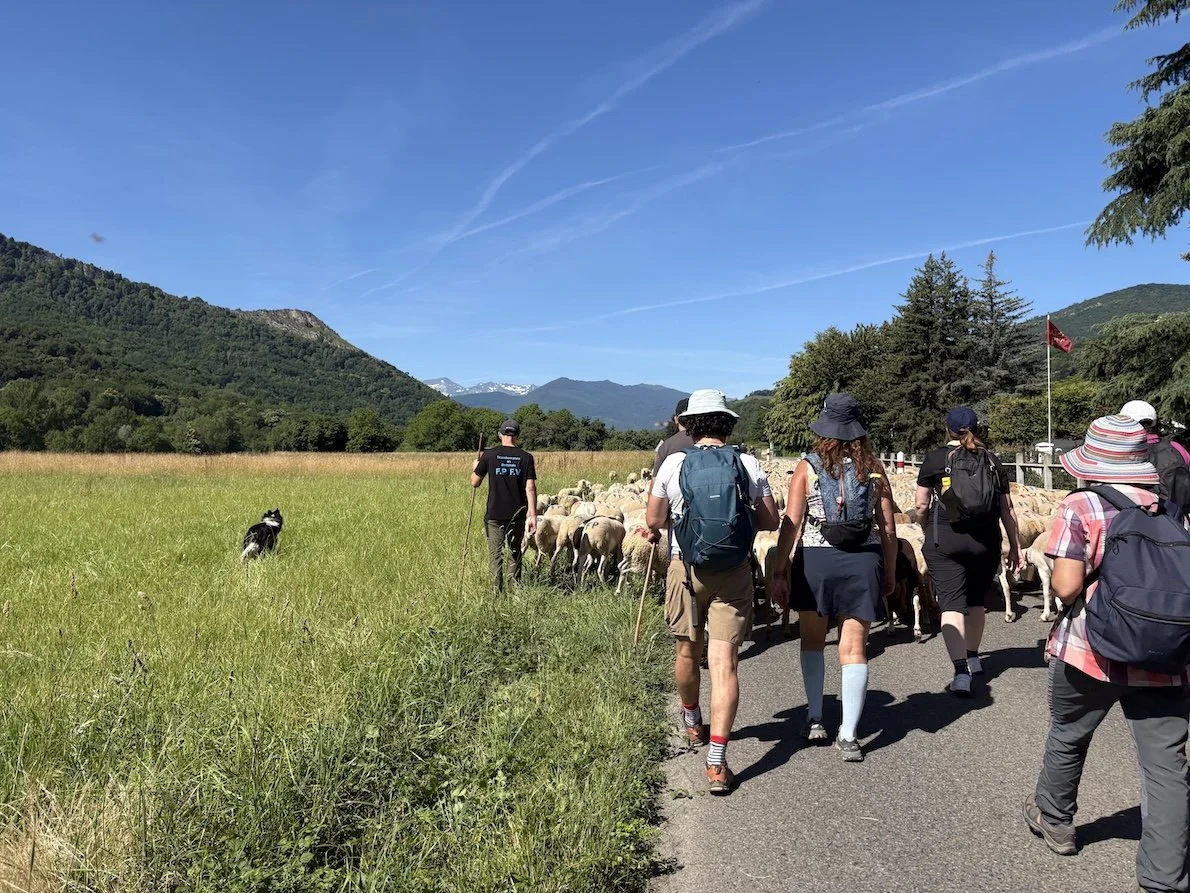
Locals gathered quietly with walking sticks, greeting neighbors with bisous and handshakes. Families arrived with children, seasoned hikers adjusted their backpacks, and a few adventurous community members prepared to follow the herd for several days, camping along the route just as generations before them had done. Solo travelers and small groups of visitors from neighboring cities arrived to experience this unique event.
Then, through the stillness, we heard the first bells. Slowly, anticipation rose as we could hear the herd of sheep getting closer. Then, almost magically, the first shepherds and their flock appeared.
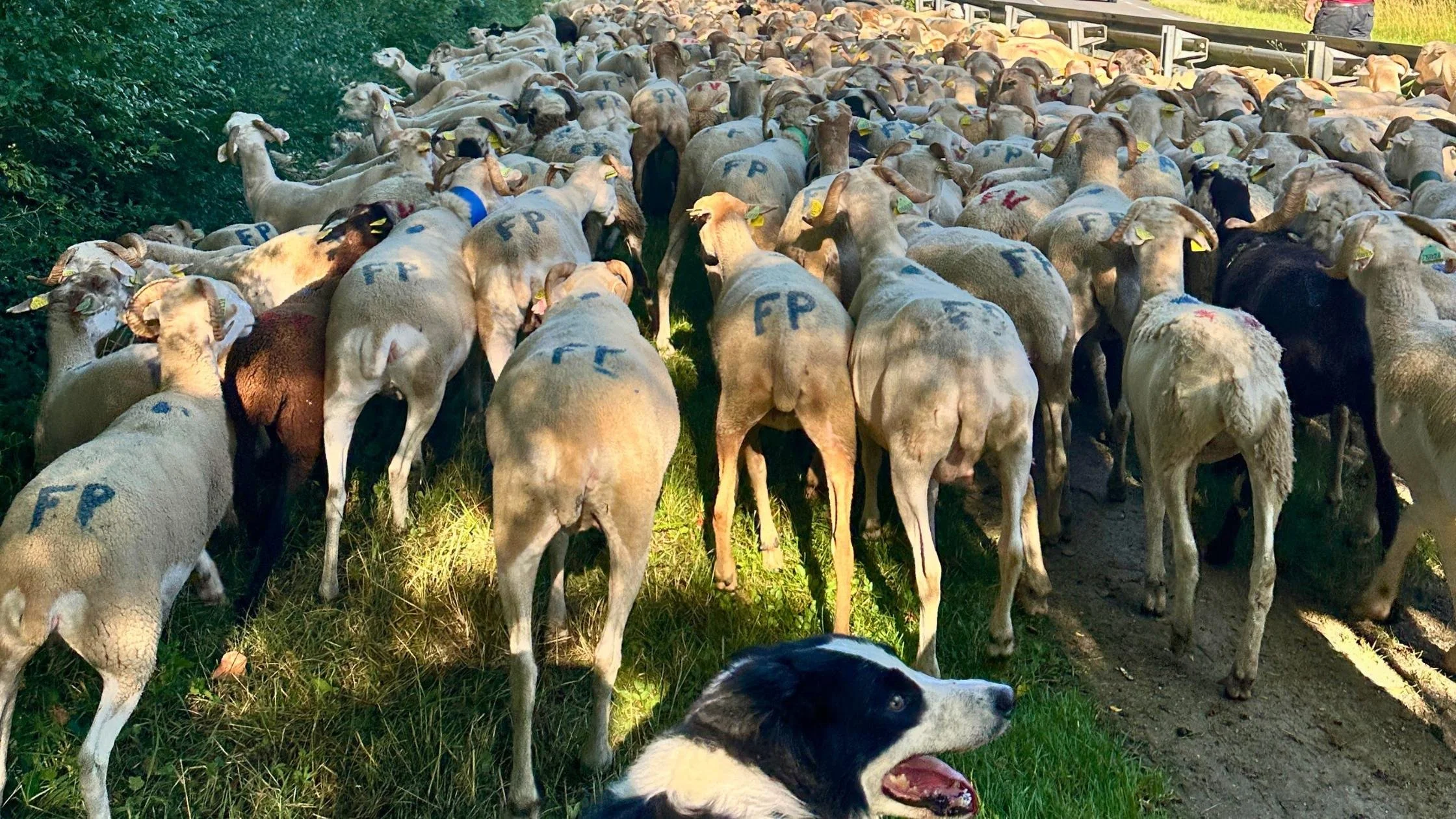
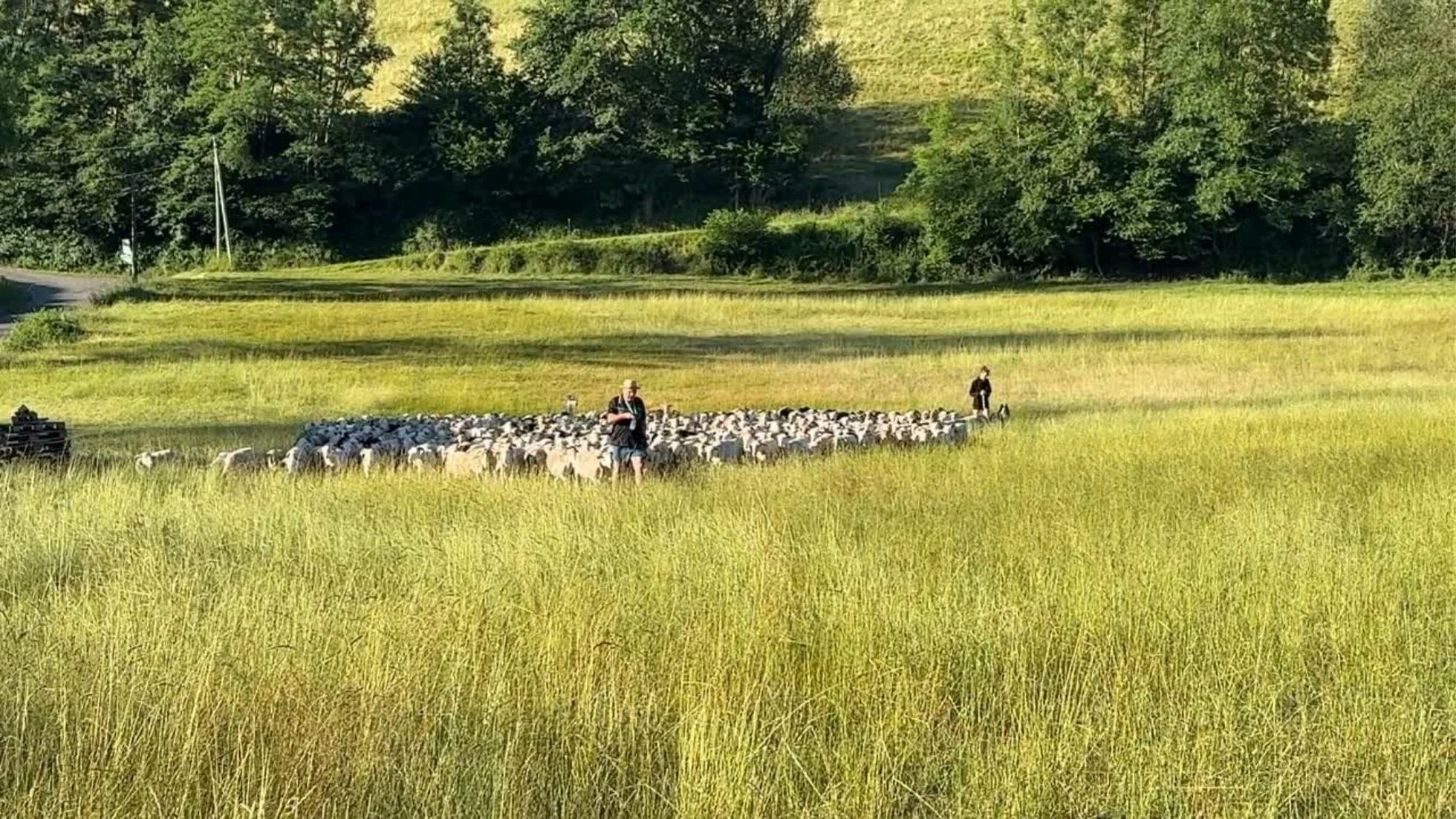
With only a few quiet commands and the help of a remarkably skilled sheepdog, hundreds of sheep emerged from the hills. Bells chimed softly around the lead animals while the 2 shepherds and dog worked in perfect partnership, guiding the flock effortlessly onto the trail.
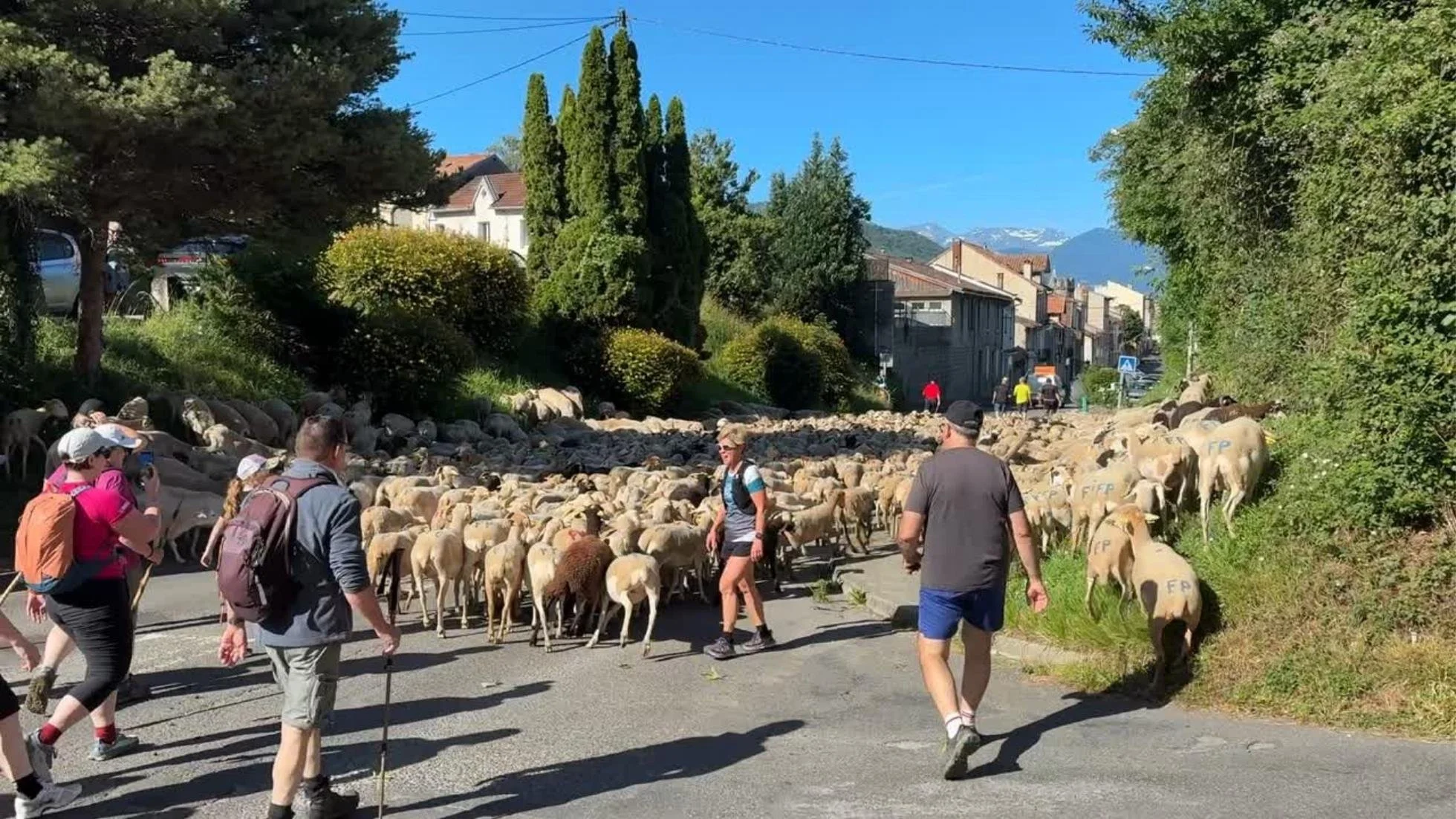
As we walked, more farms joined the procession until more than 700 sheep moved together through the valley and toward the mountains.
More than moving sheep
Before experiencing Transhumance, it would have been easy to think of it simply as moving animals from one pasture to another.
In reality, it represents an entire agricultural system.
Throughout the summer, shepherds remain in the high mountain pastures caring for the livestock while farmers return to the valleys to harvest hay and prepare feed for winter. Farmers share resources, rotate responsibilities, and periodically travel into the mountains to support the shepherds caring for their animals. It's a remarkable example of cooperation between people, animals, and the landscape.
That deep relationship between community and environment is one of the reasons UNESCO considers Transhumance an important example of sustainable pastoralism and traditional ecological knowledge. It is what we celebrate as La France Profonde, the soul of southern France. Where slow travel and authentic cultural experiences come together for a memorable European walking holiday.
Where community and tradition meet
One of the most beautiful parts of the day was realizing that everyone belonged.
Neighbors caught up while they walked. Children watched the sheep with wide eyes. Parents pushed strollers along the trail. Some participants planned to continue with the herd for two days, camping overnight before reaching the high mountain pastures.
The atmosphere wasn't loud or theatrical.
It was joyful in the quiet rhythm of shared purpose.
Every now and then a few sheep would wander into a nearby meadow for an extra mouthful of grass, and instantly the sheepdogs would spring into action, gracefully bringing them back to the flock. Watching the dogs work was astonishing. It was a level of trust and communication built over years between shepherd and dog.
When 700 sheep walk through town
Perhaps the most unforgettable moment came as the procession entered Saint-Girons on market day.
Normally bustling with shoppers and traffic, the town came to a complete stop.
Police temporarily closed the streets while the sheep flowed through the center of town. Residents stepped outside their homes with cameras, laughing as curious sheep sampled flowers and bush leaves from decorative planters before being gently redirected by the shepherds and dogs.
It was an extraordinary contrast.
Modern life simply paused.
Not because it had to, but because everyone understood this tradition mattered.
For a few moments, it felt as though centuries were walking alongside the present.
Following the valley towards the mountains
The walk to Moulis covered just over twelve kilometers.
As the miles passed, the landscape slowly transformed. The broad valley narrowed, mountain architecture became more prominent, and the high Pyrenees began rising dramatically ahead of us. Even over the course of a single morning, you could feel yourself leaving the valley behind and entering the mountains.
By the time we reached Moulis, many more people had joined the walk, making the celebration feel even more communal.
During this walk, conversation naturally flowed to another Athara Adventures experience, Le Sentier Cathare. A historic route a couple hundred kilometers east of where we stood; it only overlaps in ethos. A route that brings you into the heart of southern France's history and culture, it invites awe, joy, and reflection.
A meal that felt like family
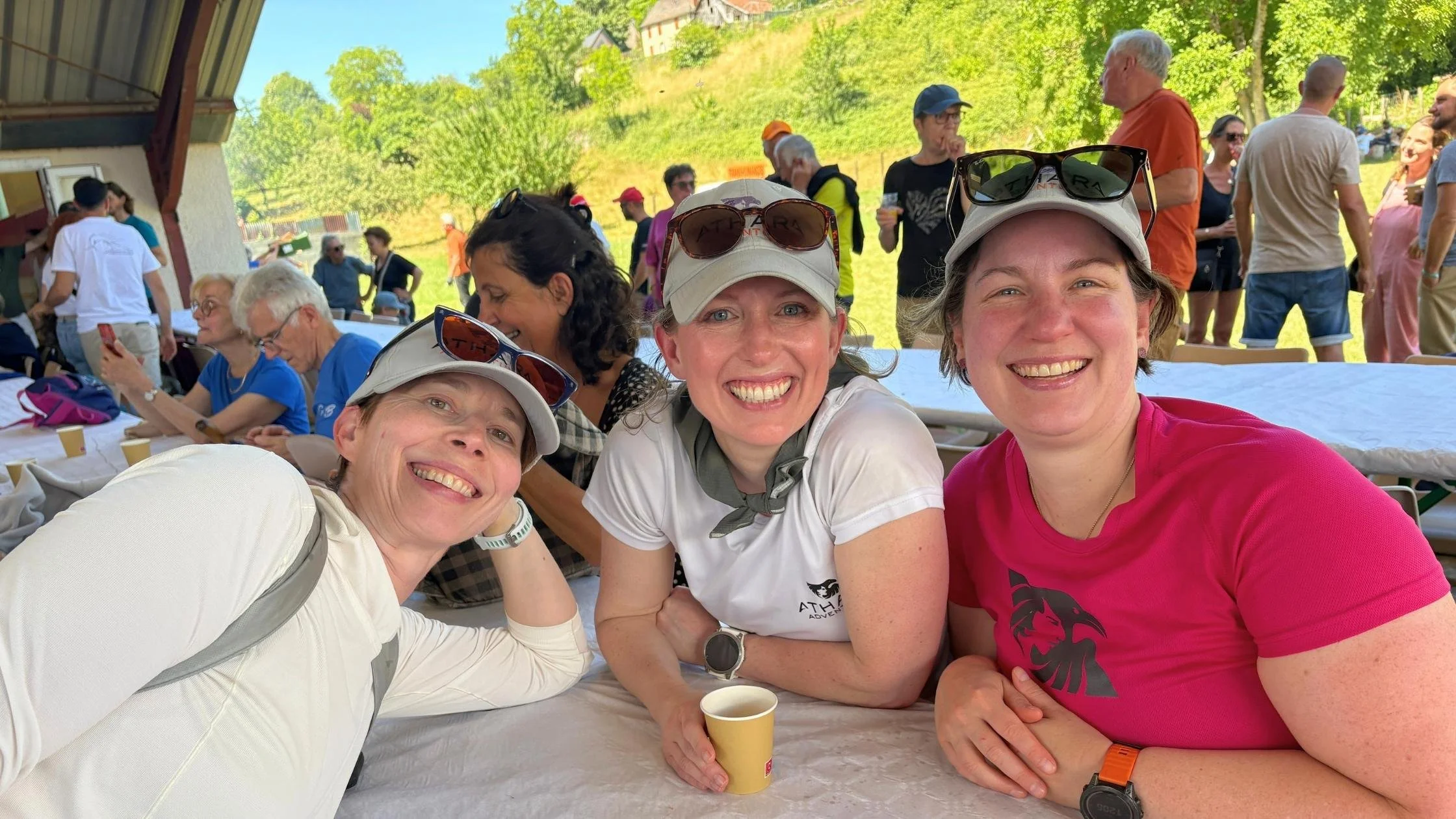
The morning valley walk ended with a long communal lunch hosted by the town.
Before the meal began, the mayor spoke about the importance of preserving this tradition for local agriculture and future generations. An accordion player wandered between the tables playing traditional songs while neighbors burst into song and applause between courses.
The meal itself was a celebration of the region:
Fresh baguettes passed from hand to hand
Local pâté, salad, and cornichons (small pickles)
Slow-cooked white beans prepared in the local Moulis cassoulet style with grilled meats
Local Tomme cheese produced from nearby farms
Warm apple crustade, one of the area's beloved desserts
Coffee followed by homemade limoncello and locally distilled fruit spirits
But what stayed with us most wasn't the menu.
It was the generosity.
We found ourselves sharing bread, conversation, laughter, and photographs with complete strangers who welcomed us as though we'd been attending this celebration for years.
The journey continues
Although the communal lunch in Moulis marked the end of our day, it was not the end of the Transhumance.
After three leisurely hours spent sharing food, stories, music, wine, and laughter, the shepherds, sheep, and many members of the community gathered themselves and continued up the valley toward the mountains. The following day, they would reach the high summer pastures where the animals will spend the season grazing under the watchful care of the shepherds.
These stopping points are an important part of the tradition.
Transhumance is not about reaching a destination as quickly as possible. It follows the pace of the animals, the landscape, and the people who care for them. Along the route, communities come together to welcome the herds, support the shepherds, and celebrate a way of life that has shaped these mountains for generations.
Each type of livestock follows its own rhythm. The horses, for example, travel much faster than the sheep. During the horse transhumance, riders and herds begin from a different starting point and arrive in Moulis much earlier in the morning, where the village welcomes them with coffee, pastries, and an apéritif. Their communal meal takes place later in the day farther up the valley in Castillon before they continue climbing toward the mountain pastures.
Whether gathering for coffee, lunch, music, or conversation, these pauses reveal something essential about life in the Pyrenees. They reflect values that can be difficult to find in modern life: taking time to connect, moving at the pace of the journey, and remembering that the relationships between people matter just as much as the work itself.
The destination is important.
So is everything that happens along the way.
Why we created a Transhumance tour
At Athara Adventures, we believe that the most meaningful travel experiences are the ones that bring us closer to the people and places that make a region unique.
That belief is exactly why we built a tour around Transhumance.
Many visitors come to the Pyrenees for the mountains, and the mountains are extraordinary. But the true richness of this region extends far beyond its landscapes. The Pyrenees are home to centuries-old traditions, deeply rooted communities, remarkable food culture, and a way of life that remains closely connected to the land.
Much of what makes this place special cannot be found in guidebooks.
It lives in conversations with local farmers. In recipes passed down through generations. In stories shared around community tables. In traditions that continue not because they are performed for visitors, but because they remain meaningful to the people who call these mountains home.
Transhumance brings all of these elements together.
It is history, agriculture, culture, community, hospitality, food, and landscape woven into a single experience. Walking alongside shepherds and neighbors offers a rare opportunity to understand the region not as a tourist, but as a participant.
That kind of connection matters to us.
Whenever possible, we seek experiences that allow our guests to engage with local communities in genuine and respectful ways. We want travelers to leave not only with beautiful photographs, but with a deeper understanding of the people, traditions, and values that make this corner of the world so special.
The Pyrenees remain one of Europe's hidden gems. Many people know little about the region, and much of its history and cultural heritage is preserved through the stories and knowledge passed from one generation to the next.
Being welcomed into traditions like Transhumance is both a privilege and a gift.
Our mission is to help others experience the magic of this region in the same way we have: genuinely, thoughtfully, and with a deep appreciation for the people who keep its culture alive.
A living heritage
UNESCO describes Transhumance as far more than seasonal livestock movement. It is a living practice that connects families, territories, ecosystems, and generations through shared knowledge and participation. It survives because communities continue to practice it, not as a performance for visitors, but as an essential part of their identity.
That is exactly how it felt.
Not like attending a festival.
Not like watching history.
But like being invited into another way of life.
Transhumans FAQs
Where does Transhumance take place?
Transhumance in the Pyrenees is the ancient seasonal migration of herds of cows, sheep, and horses between multiple valleys and high mountain pastures of the Ariège in southern France and Andorra. For centuries, this tradition has shaped life in the Pyrenees. Over the course of two or three days every spring and guided by shepherds and locals, herds climb to summer grazing lands, and every autumn, they return to the valleys.
How does Transhumance fit with modern-day life?
This authentic practice of transhumance on foot, far from being reduced to a folkloric event, is completely in line with sustainable development and respect for animal wellbeing. The practice of inviting the community to participate has been revived for just the past 20 years, as a way to support this important aspect of the local culture and economy.
In the spring, the shepherds traveling to the high mountain pastures plan to stay in high mountain huts tending the animals, and in the fall, they return to the valley along with the herds, while the farmers spend the summer making growing and harvesting hay to prepare for the winter. Now high mountain huts can be replaced with camper vans, and modern forestry roads can help with access to the animals.
How does Transhumance affect the culture and economy?
More than a pastoral practice, transhumance has created the unique landscapes and cultural heritage of the Pyrenees. Shepherds’ huts, traditional stone orris, dry-stone trails, local cheeses, and mountain gastronomy all reflect a way of life passed down through generations. Recognized as UNESCO Intangible Cultural Heritage, transhumance plays an essential role in sustainable mountain farming, biodiversity conservation, and animal welfare.
Witnessing or participating in the transhumance is an unforgettable experience. As herds cross wild mountain scenery, visitors discover an authentic Pyrenean tradition where nature, culture, and history come together. Hiking these ancient paths and supporting local producers helps preserve one of the most enduring living traditions in the Pyrenees. Cheese, wool, and meats are all part of a variety of artisanal products available because of this way of life.
What does a day along the Transhumance look like?
In the Bethmale Valley, one of the most authentic places to experience transhumance in the Pyrenees, the event unfolds over two days, with the option to join either one or both.
On Saturday, visitors follow a flock of 700 sheep traveling from Lescure along the scenic greenway to Bordes Uchentein. Along the route, each mountain village welcomes the herds and shepherds with local food, drink, and celebrations, offering a unique immersion into Pyrenean culture and pastoral traditions.
On Sunday, the transhumance continues toward the breathtaking Cirque de Campuls above Lake Bethmale, where the summer mountain pastures begin for the region’s horses, sheep, and cows. When the herds arrive, the festivities culminate in a traditional pastoral meal accompanied by folk songs and dances performed by La Bethmalaise, celebrating the living heritage of the Ariège Pyrenees.
Join Us for Transhumance
Experiences like this remind us that the most meaningful travel isn't always found at famous landmarks.
Sometimes it's found walking quietly beside shepherds, listening to sheep bells echo across a mountain valley, sharing lunch with strangers who quickly become friends, and participating in traditions that have endured for centuries.
We're delighted that our June French Pyrenees walking tour will include the opportunity to experience Transhumance alongside our local community.
Some traditions are best observed.
Others are best walked.