Walking and Cycling Holidays in the Pyrenees: More Than Mountains
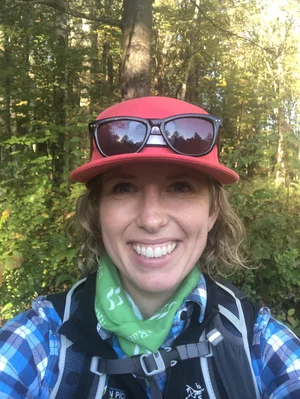
By Anna Berez | Director of Operations & Co-Founder, Athara Adventures | Wilderness First Aid | E-Mountain Bike Maintenance | Outdoor Group Management
The Pyrenees are often described through scenery.
Peaks, ridges, valleys, forests, waterfalls, open roads and wide mountain views.
All of that is true. But it is not the whole story.
A walking or cycling holiday in the Pyrenees is not only about landscape. It is about moving through a mountain range where history, food, village life, resistance, pilgrimage, natural beauty and borderland culture sit close to the surface.
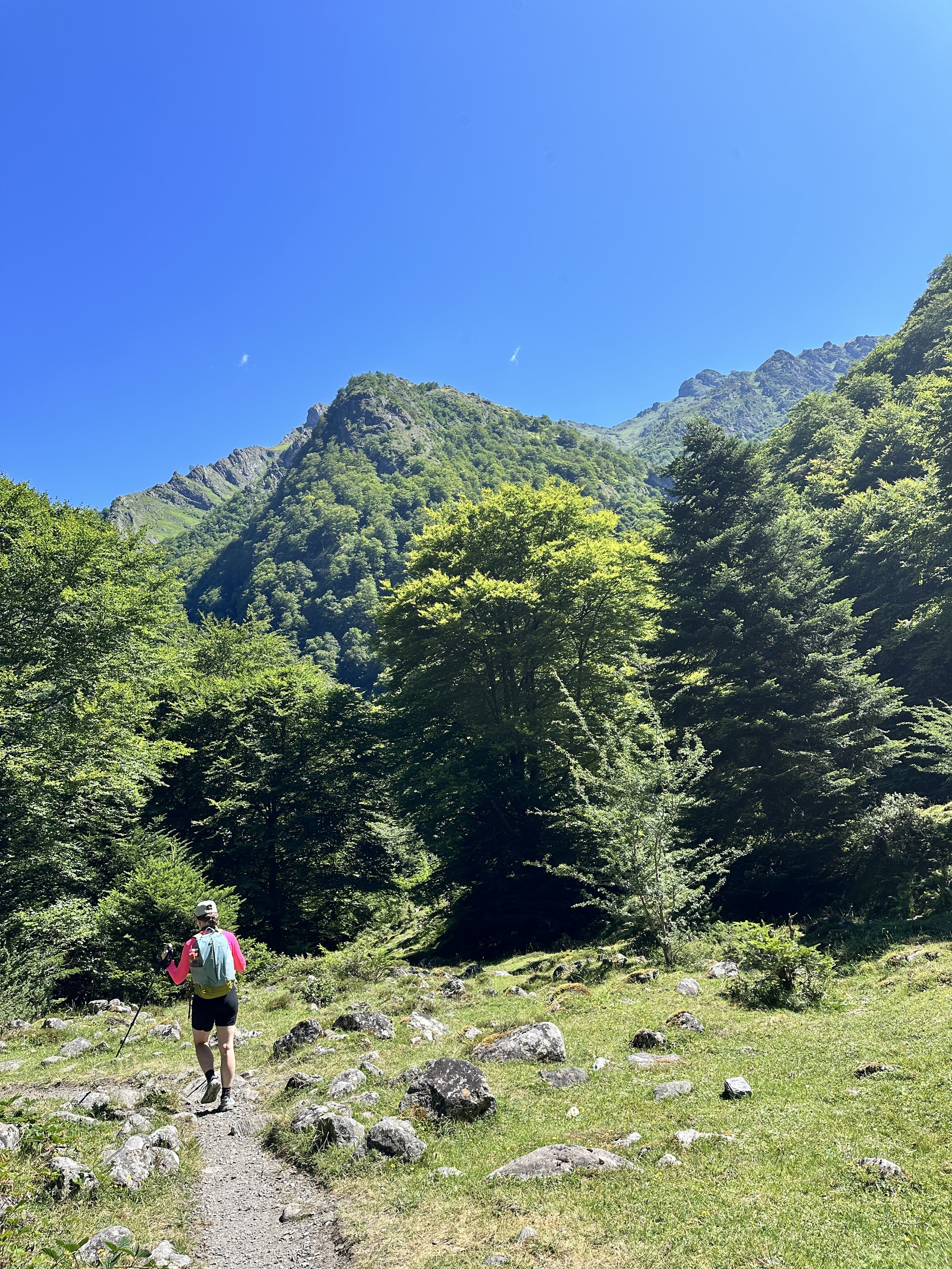
The Pyrenees stretch between the Atlantic and the Mediterranean, forming a natural border between France and Spain. The French side and the Spanish side each have their own character, culture, weather patterns and walking traditions. Some areas are dramatic and high, with famous natural sites such as the Cirque de Gavarnie and Pic du Midi. Others are quieter, lower and more intimate, shaped by medieval villages, old tracks, hidden valleys and paths that have carried people for centuries.
At Athara, the Pyrenees are not simply a place we operate tours. They are where we live our lives.
Sarah, Anna and Seoka walk the paths, ride the roads, test routes, revisit villages, check timings, notice weather shifts and make hundreds of small decisions before guests ever arrive.
A good Pyrenees tour is not just a route across a map.
It is lived knowledge, shaped into a journey.
The Pyrenees at a glance
A walking or cycling holiday in the Pyrenees can suit travellers who want:
Mountain scenery without losing the human scale
The Pyrenees are dramatic, but many routes move through villages, valleys, forest paths and quiet roads, not only high mountain terrain.Walking trails and cycling routes with cultural depth
Paths often connect castles, pilgrimage routes, wartime history, medieval villages, farms, markets and local food.Active days that can be adapted to different levels of fitness
Some routes are gentle and rolling. Others are more demanding, with climbs, descents and rougher ground.A quieter alternative to more crowded European mountain regions
The Pyrenees have famous places, but they also offer many lesser-known routes and hidden gems.A choice between walking, cycling and e-biking
Each mode of travel reveals the landscape differently.
This is what makes the Pyrenees so rewarding. They are not one thing. They are a whole region of possibilities.
The French side and the Spanish side
One of the first things to understand about the Pyrenees is that they are not a single, uniform destination.
The French side often feels greener, softer and more village-based in places, with deep valleys, wooded slopes, pastoral landscapes and historic towns. In regions such as Ariège, Aude and the wider Occitanie area, walking routes can move through forest tracks, castle paths, medieval villages and Pyrenean foothills rather than exposed high-altitude terrain.
The Spanish side often feels drier, wider and more open in many areas, with dramatic canyons, high plateaus, Romanesque churches, pilgrimage routes and strong regional identities across Catalonia, Aragon, Navarre and beyond.
The border itself has shaped the region for centuries.
People have crossed these mountains for trade, refuge, resistance, pilgrimage, work, family and survival. That history matters because it changes how walking and cycling here feel. You are not simply moving through scenery. You are moving through a landscape that has always connected people as much as divided them.
Walking and cycling offer different ways to know a place
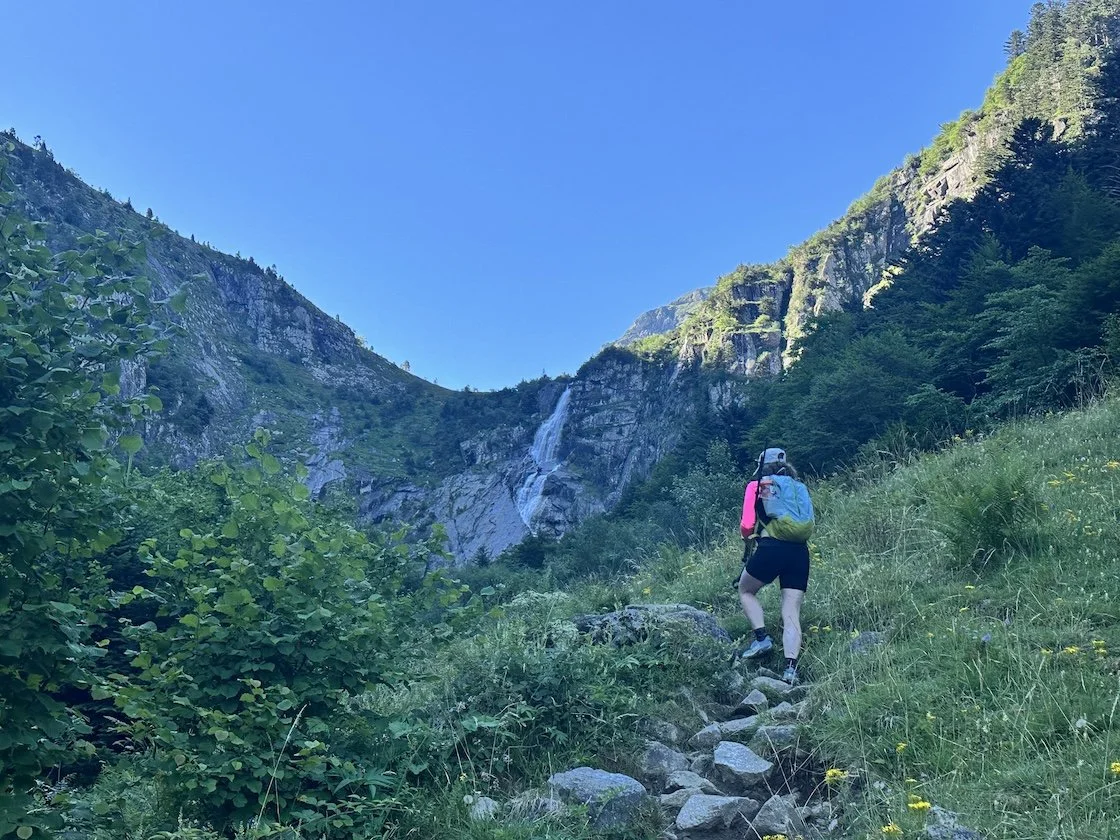
Walking slows everything down.
You notice the texture of the path, the smell of herbs in the heat, the sound of cowbells, the first glimpse of a castle on a ridge, the moment a village appears after a long descent. A walking trail gives you time to absorb the land through the body.
Cycling and e-biking create a different kind of relationship.
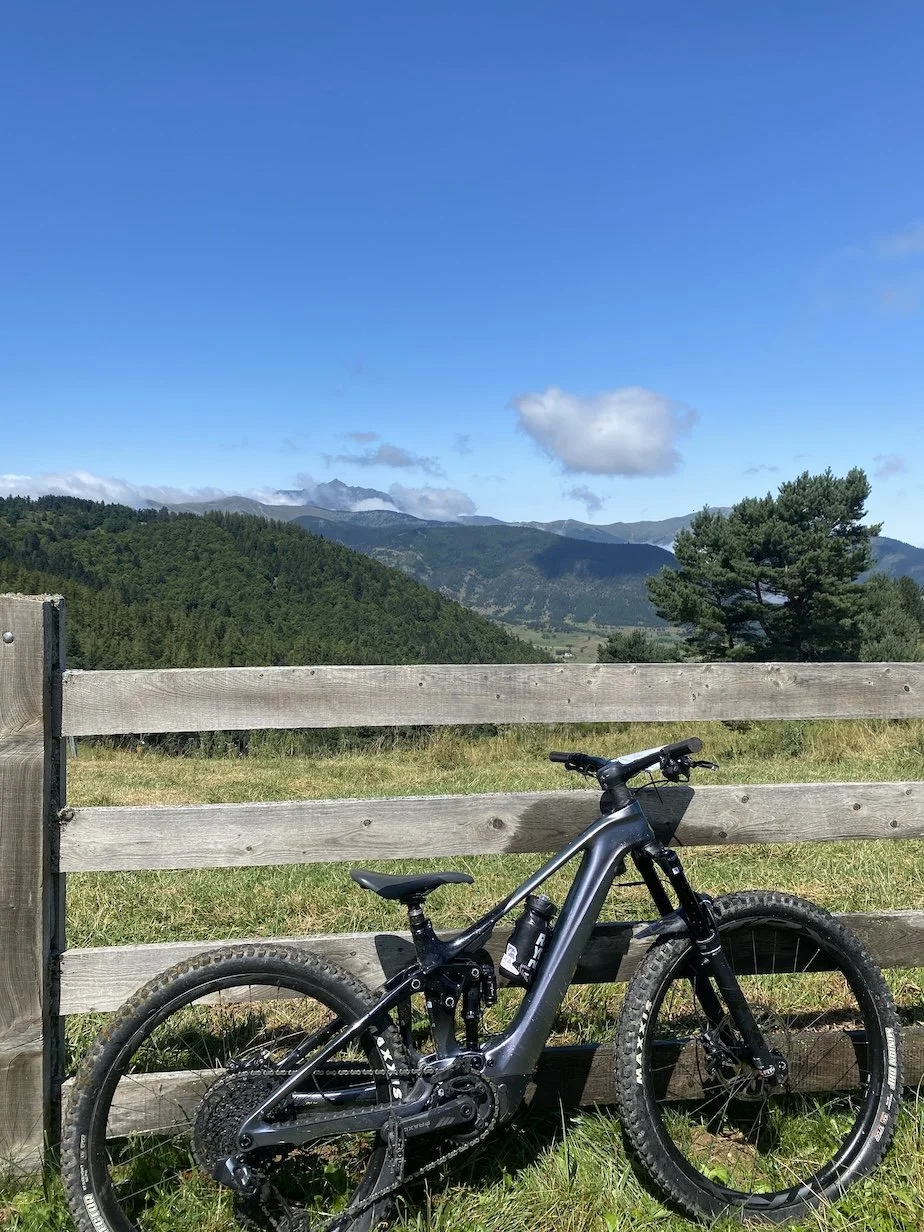
You feel the sweep of the road, the link between valleys, the rhythm of climbs and descents, the way one village leads to another. You cover more ground, but still travel slowly enough to feel connected to the landscape.
Neither is better. They simply reveal different versions of the Pyrenees.
Walking is intimate.
Cycling is rhythmic.
E-biking can make more ambitious terrain accessible without turning the holiday into a test.
A well-designed Athara tour understands this distinction. The route is not chosen because it looks good on a map. It is chosen because the day makes sense as an experience.
What the terrain is actually like
The Pyrenees offer enormous variety, which is why clear route information matters.
Depending on the area and itinerary, walking trails may include:
forest tracks
old stone paths
village-to-village routes
ridgelines
mountain roads
pastoral tracks
castle approaches
river valleys
lower Pyrenean foothills
steeper mountain paths
Cycling and e-biking routes may include quiet roads, rolling climbs, valley roads, mountain passes, village lanes and occasional sections where support or route judgement matters.
Some parts of the Pyrenees are high and rugged. Others are gentler, lower and more culturally layered. Not every Pyrenees holiday is a high-altitude trek, and not every cycling holiday is built for elite riders.
This is why level of fitness matters, but so does route choice.
A person who enjoys regular walking may be very comfortable on one Pyrenees itinerary and less suited to another. A cyclist who loves rolling roads may not want a route built around demanding climbs. A group of friends may want beauty, food and culture more than distance.
A good tour begins with understanding this properly.
The famous places, and the quieter ones
The Pyrenees include some of Europe’s most striking natural sites.
The Cirque de Gavarnie, part of the wider Pyrénées-Mont Perdu UNESCO World Heritage site, is known for its vast natural amphitheatre and high mountain setting. The UNESCO listing spans the France-Spain border and includes dramatic cirque walls on the French side and deep canyons on the Spanish side.
The wider Pyrenees National Park protects some of the range’s most remarkable landscapes, with places such as Gavarnie, Pont d’Espagne, Néouvielle and Pic du Midi d’Ossau named by the park as notable areas.
Pic du Midi is another well-known Pyrenean landmark, closely associated with mountain views and astronomical observation.
These places matter because they show the scale and natural beauty of the mountain range.
But the Pyrenees are not only their famous sites.
Some of the most memorable experiences happen elsewhere: on a quiet path between two villages, beside a small chapel, over lunch in a market town, on a road with no traffic, at a viewpoint that never appears on a “must-see” list.
Athara’s work often sits in this balance.
We respect the famous landscapes. But we also know that the hidden gems, the smaller trails and the less obvious pauses are often what make a journey feel personal.
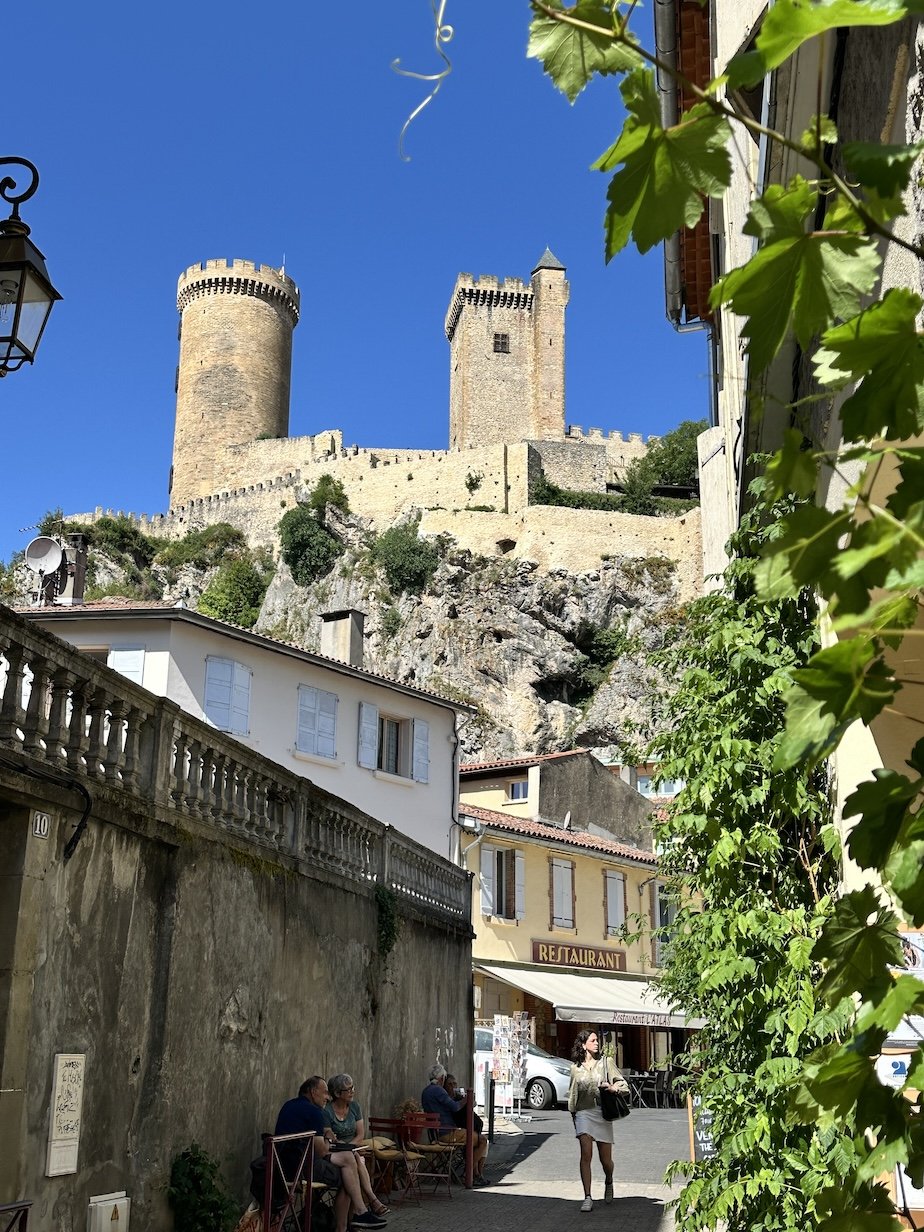
History is everywhere here
The Pyrenees are layered with history.
On the French side, routes such as the Sentier Cathare pass through landscapes associated with Cathar castles, medieval villages and the religious conflicts of southern France. The Chemin de la Liberté carries a different weight, following a route linked to wartime escape and resistance across the mountains.
Elsewhere in the Pyrenees, pilgrimage routes connect to the wider network of paths leading towards Santiago de Compostela. These routes remind us that the Pyrenees have long been crossed by people travelling for purpose, faith, safety, work or change.
This history gives walking and cycling holidays in the Pyrenees a particular depth.
You do not need to be a historian to feel it. You feel it in the placement of a castle, the shape of a village street, the way a path follows the easiest line over difficult ground.
The landscape has memory.
Food, villages and the rhythm of the day
One of the great pleasures of travelling through the Pyrenees is that the experience does not stop when the walking or cycling stops.
Food is part of the journey.
So are villages, markets, accommodation, cafés, thermal towns, local wines, cheeses, bread, mountain dishes and simple meals that feel deeply connected to place.
This is especially true on the French side, where a day might move from a forest trail to a medieval village, from a climb to a long lunch, from a castle view to an evening meal that allows the body to settle.
In some areas of the Pyrenees, thermal waters and local bains have shaped traditions of rest and recovery. These details matter because active holidays are not only about what the body can do. They are also about how the body is restored.
A good Pyrenees holiday understands the whole rhythm of the day.
Not just the route.
The arrival.
The meal.
The pause.
The evening.
The next morning.
The invisible work behind a well-planned Pyrenees tour
A walking or cycling holiday can look simple on a page.
A route. A distance. A village. A hotel. A meal.
What is harder to see is the judgement behind those choices.
At Athara, routes are walked, ridden, tested and refined by the women who lead and shape the tours. Sarah, Anna and Seoka do not design from a distance. They spend time on the roads, paths and trails themselves.
They ask practical questions.
Where does the climb become too much?
Where is the best place to pause?
Which road feels safe and beautiful?
Which path is technically possible but not enjoyable?
Where will people need reassurance?
Which village changes the feel of the day?
Where does the group need structure, and where does it need space?
This is the work that makes a trip feel smooth.
Many thousands of footsteps and pedal strokes go into shaping an Athara experience before anyone books a place.
That care is hard to show in an itinerary, but easy to feel when you are there.
Five things to consider before booking a walking or cycling holiday in the Pyrenees
What kind of movement do you actually enjoy?
Walking, cycling and e-biking create very different experiences. Choose the mode that suits how you like to travel, not just what sounds impressive.
What level of fitness does the route require?
Look for clear information about distance, terrain, climbs, descents, road conditions and daily rhythm.
Do you want famous sites, quieter places, or both?
The Pyrenees offer national parks, UNESCO landscapes, iconic viewpoints and hidden trails. The best trip depends on what kind of experience you want.
How much culture do you want alongside the activity?
Some travellers want maximum time on the trail. Others want castles, medieval villages, food, wine, pilgrimage history or resistance stories woven into the journey.
Would a small-group or private tour suit you better?
Scheduled tours offer ease and companionship. Private tours can work beautifully for friends, families, walking groups or cycling companions who want a route shaped around them.
These questions help move a holiday from vague interest to good fit.
Scheduled tours and private possibilities
Some people discover Athara through scheduled walking, hiking, cycling or e-biking tours.
These small-group departures are ideal if you want to join a carefully planned experience with the route, accommodation, food, guiding and daily rhythm already shaped.
But scheduled dates are not the only way to travel with Athara.
For groups of friends, families, women’s groups, mixed groups, walking companions, cycling clubs, coaching communities or private parties, Athara can often create bespoke walking or cycling holidays using existing routes as a foundation, where season, guide availability and group size allow.
This matters because many people do not necessarily want a completely different tour.
They want the right Athara route, at the right time, with the right people.
Athara brings the route knowledge, local relationships, pacing, accommodation, food, logistics and practical judgement. You bring the people and the reason for gathering.
Men are welcome too
Athara often appeals strongly to women, and some experiences are designed specifically for women.
But Athara also welcomes men on mixed departures and private group tours where the trip format allows.
What matters most is fit.
Athara tours suit people who are respectful, curious, active, open to travelling thoughtfully, and interested in experiencing landscape, history and culture with care rather than haste.
The tone is warm, capable and human. That is the atmosphere we protect.
Walking and cycling the Pyrenees with Athara
A walking or cycling holiday in the Pyrenees should leave you with more than photographs.
It should leave you with the sense that you have moved through a place properly. With your body, your attention and enough time to let the land register.
The Pyrenees offer mountains, yes.
But they also offer medieval villages, natural beauty, quiet roads, walking trails, food, wine, history, hidden gems, borderland culture and stories carried through landscape.
For those looking for a walking or cycling holiday in France that feels carefully planned, locally rooted and deeply human, Athara’s Pyrenees tours are a natural place to begin.
You can explore Athara’s walking holidays in the Pyrenees, cycling and e-biking tours, Sentier Cathare walking tour, Chemin de la Liberté walking tour, or enquire about a private walking or cycling holiday for your own group.
Frequently asked questions
What is the best time to visit the Pyrenees for walking or cycling?
The best time to visit depends on the route, altitude and type of activity. Spring, summer and autumn can all work well in different parts of the Pyrenees. September and October are often excellent for walking holidays, with cooler temperatures and quieter trails.
Are the Pyrenees better for walking or cycling?
Both work beautifully, but they offer different experiences. Walking gives a slower, more intimate connection to paths, villages and landscape. Cycling and e-biking allow you to cover more ground and feel the relationship between valleys, roads and mountain views.
What level of fitness do I need for a Pyrenees holiday?
This depends on the specific route. You should check daily distances, terrain, ascents, descents and expected walking or riding time. Athara is careful about matching guests to the right experience.
Are Athara’s Pyrenees tours only for women?
No. Athara often appeals strongly to women, and some experiences may be women-only, but mixed tours and private groups can welcome men too. Always check the specific tour page.
Can I book a private walking or cycling holiday?
Yes. Where season, guide availability and group size allow, Athara can shape private walking, cycling or e-biking holidays using existing routes as a foundation.
Do Athara tours visit famous Pyrenees sites like Cirque de Gavarnie or Pic du Midi?
Not every Athara route visits the most famous Pyrenees sites. Some tours focus on better-suited historic routes, quieter trails, Cathar landscapes, resistance history, medieval villages or carefully chosen local experiences. The aim is always good fit, not box-ticking.
What makes Athara different from a standard walking or cycling holiday company?
Athara is women-founded, women-led and rooted in the Pyrenees. Routes are walked, ridden, tested and refined by the team, with attention to terrain, pace, food, accommodation, culture and the small details that shape how a holiday actually feels.